Africa is short of healthcare workers — dramatically so. The World Health Organization projects a shortfall of 6.1 million health workers across the continent by 2030, even as the population of people needing care continues to grow. The gap is widest in the places where it hurts most: rural districts, primary-care clinics, and the under-resourced facilities where children with respiratory illness are first seen.
This isn't a problem we can recruit our way out of in the next decade. So the question becomes: how do we multiply the capacity of the clinicians who are on the ground today? That's the question MamaOpe is built to answer.
What the shortage actually looks like
Behind the headline number is a daily reality:
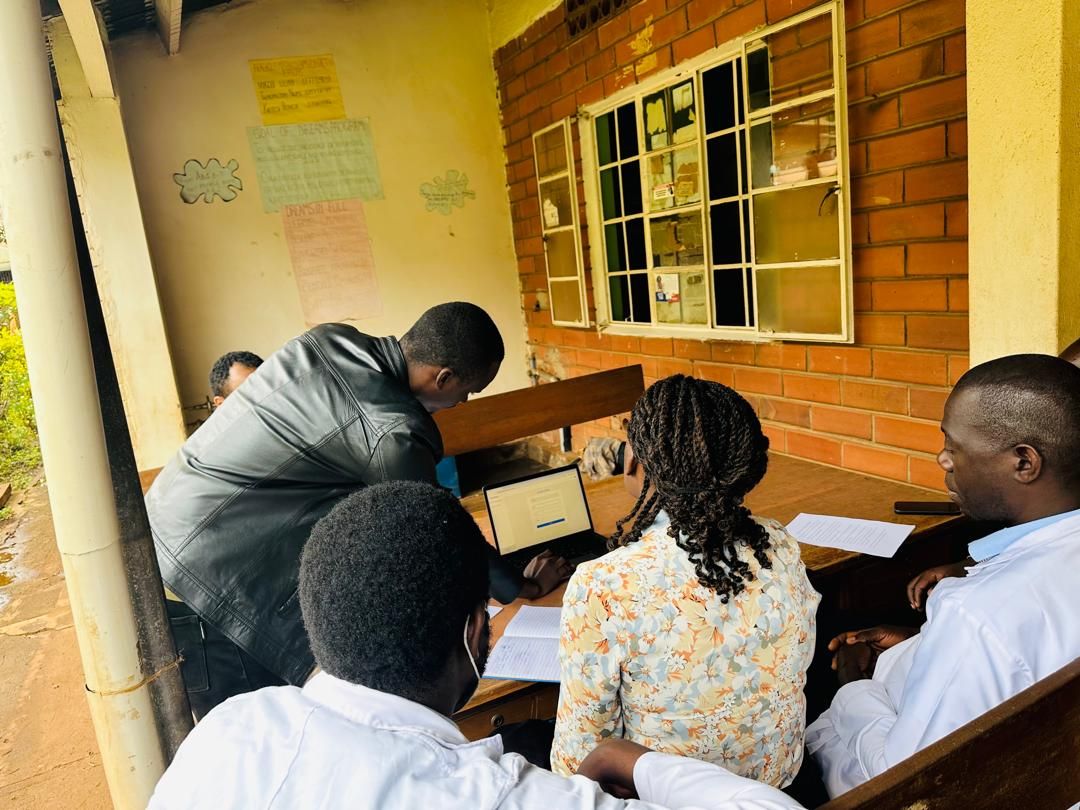
- A nurse running a paediatric outpatient clinic alone, seeing 60 children in a shift
- A community health worker triaging respiratory symptoms without access to a stethoscope, let alone a chest X-ray
- A junior clinician in a district hospital with no specialist to consult and limited bandwidth to follow updated guidelines
- A doctor in a referral hospital reviewing cases referred from clinics that had no diagnostic capability to begin with
In conditions like these, even excellent clinical training collides with hard constraints: time, tools, and the cognitive load of practising under pressure. The result shows up in the data. Observational studies across Burundi, the DRC and Nigeria found that compliance with childhood-illness guidelines can be as low as 51%, even when clinicians know what the guidelines say. The bottleneck isn't knowledge — it's the conditions of work.
"You can't fix a shortage of clinicians by training more clinicians fast enough. You fix it by giving the clinicians you already have tools that work for them, in the conditions they actually face."
How decision support changes the equation
MamaOpe's HealthNavi Clinical Decision Support System is built specifically for the frontline. It runs on devices clinicians already use, works offline-first in low-connectivity environments, and guides health workers through evidence-based protocols at the point of care — so following best practice becomes the easiest path, not the hardest.
In our pilot study, health workers using HealthNavi achieved 95%+ adherence to clinical guidelines — a near-doubling on the regional baseline — and a measurable reduction in unnecessary antibiotic prescriptions. That second number matters as much as the first: every prescription saved is a contribution to the global fight against antimicrobial resistance, a crisis that disproportionately affects the same low-resource settings.
Multiplying capacity, not replacing it
Decision support is not a substitute for the clinician. It's a force multiplier. Done well, it does three things at once:
- Reduces cognitive load so the clinician's attention goes to the patient, not to remembering a protocol
- Speeds triage so more patients get the right level of care, faster
- Builds skill over time — junior clinicians learn through the system's prompts, accelerating their growth
Combined with the MamaOpe device — which converts heart and lung sounds into clear diagnostic insights — a single community health worker can deliver care that previously required a referral and a delay. That's the shape of meaningful capacity-building in a workforce-constrained system.
What we'd like to see next
Tackling the 6.1M gap is a system-wide challenge. The tools matter, but so do the policies and partnerships that get them into the hands of clinicians at scale. MamaOpe is investing in three areas:
- Expanding pilots with hospital networks, public health systems and NGO programmes across East Africa
- Working with regulators to ensure AI-assisted diagnostics are validated, transparent and trustworthy
- Publishing our pilot data openly so the broader medtech and global-health community can build on it
If you work in health systems, public policy, or impact investing — and you're thinking about the workforce crisis — we'd love to talk.
For partnership enquiries, contact hello@mamaope.com.